BMW i3 vs Mercedes C-Class Electric vs Hyundai Ioniq 6: The Ultimate Premium EV Showdown
The long-awaited electric BMW i3 has arrived to challenge the premium compact executive segment, facing off against the bespoke Mercedes C 400 Electric and the updated Hyundai Ioniq 6. After rigorous testing on UK roads, Auto Express determines which of these three distinct approaches to electric mobility offers the best balance of performance, luxury, and value for money.
The automotive industry’s shift toward electrification has taken a significant step forward with the arrival of the new BMW i3, a compact executive saloon that finally brings the manufacturer’s advanced Neue Klasse platform to the core of its lineup. While BMW initially launched this cutting-edge technology with the iX3 SUV, the 12-month delay in releasing the 3 Series version has not diminished expectations. The question now is whether the electric i3 can hold its ground against established rivals that have already refined their own electric propositions.
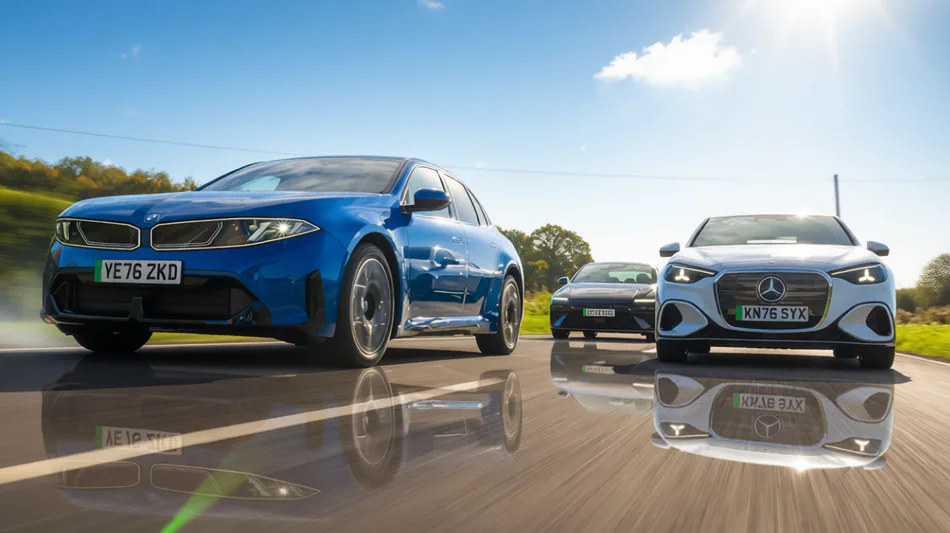
To determine the i3’s standing in the market, Auto Express conducted a comprehensive comparative test on UK roads, pitting it against two formidable competitors: the Mercedes-Benz C 400 Electric and the updated Hyundai Ioniq 6. These vehicles represent different strategic philosophies within the premium electric sector, offering a stark contrast in pricing, technology, and driving dynamics.
The BMW i3 is built on the same bespoke Neue Klasse architecture as the iX3, distinguishing it from its petrol-powered sibling despite their visual similarities. The vehicle is available with either an 87kWh or a larger 113.4kWh battery pack, with all models coming standard with a two-motor, four-wheel-drive setup. The test unit was the First Edition variant, priced at £58,535, sitting above the base M Sport and M Sport Pro models which start at £47,925.
Mercedes-Benz approaches the segment with a strategy of exclusivity. The C 400 Electric shares its exterior styling with the traditional combustion-engined C-Class but utilizes a dedicated electric platform underneath. Currently available only in the C 400 badging, it features a 94kWh battery and 4MATIC four-wheel drive. The entry-level Sport model starts at £57,995, though Mercedes anticipates that the majority of sales will come from the higher-spec AMG Line versions with Premium and Premium Plus trims, which command even higher prices.
At the opposite end of the pricing spectrum is the Hyundai Ioniq 6. Having previously challenged BMW’s electric i4, the Korean manufacturer has updated the Ioniq 6 with sharper aerodynamic styling and larger batteries to extend its range. The trim lineup includes the entry-level Premium model, alongside N Line and N Line Evo specifications, which offer rear or four-wheel drive options. With prices ranging from £36,990 to £46,960, the Ioniq 6 presents a competitive alternative to the German rivals.
In terms of driving dynamics, the test revealed distinct character profiles for each vehicle. For drivers who prioritize comfort above all else, the Mercedes C 400 Electric emerges as the clear winner. Equipped with optional air suspension, it delivers a ride that is fast, quiet, and refined at all speeds. The cabin offers S-Class levels of refinement in a compact package, bolstered by high-grade materials and a user-friendly Hyperscreen interface.
The BMW i3, conversely, adopts a sportier stance. Its suspension setup is firmer, resulting in an unsettled feel at lower speeds, which contrasts with the Mercedes’ plushness. However, this trade-off is justified by the i3’s sharp handling and agile dynamics, which mirror the balanced driving experience of BMW’s traditional combustion models. The Hyundai Ioniq 6 falls somewhere in between; its suspension is firm and feels less sophisticated than its German counterparts, though it is not harsh enough to be uncomfortable. While it possesses a sporty edge, it lacks the engaging driving involvement found in the BMW.
Technology and interior design further differentiate the trio. The BMW i3 inherits the Panoramic Vision display from the iX3, featuring a large high-resolution touchscreen and a heads-up display across the windscreen. Mercedes’ Hyperscreen is notably larger and highly configurable, offering a premium digital experience. The Hyundai’s interface is described as spartan in comparison but remains well-equipped for its lower price point.
Range efficiency proved to be a strong suit for the BMW i3. Utilizing its large 113.4kWh battery and superior efficiency, the i3 achieved over 420 miles of range, making it the champion of this test. The Mercedes was slightly held back by motorway consumption but remains efficient at lower speeds. The Hyundai, despite having the smallest battery of the three, still offers a competitive driving range.
Practicality varies across the group. All three vehicles prioritize front-seat occupants, with rear passengers in all models experiencing limited legroom. Headroom is notably reduced in the Mercedes and Hyundai compared to the BMW. Boot access also differs; the Ioniq 6 suffers from a narrow opening and the smallest capacity, while the i3 offers better access but less volume than the Mercedes. The C-Class distinguishes itself with a large frunk (front trunk), adding useful storage space.
Safety and warranty provisions also play a role in the comparison. Neither the BMW nor the Mercedes has had its Euro NCAP results published yet, though both are fitted with extensive safety equipment. The BMW’s systems are noted for being less intrusive than those in other vehicles. Hyundai’s Ioniq 6 holds a five-star rating from 2022, achieving best-in-class results at that time, though the organization notes that updated testing protocols may render this score incomparable to future results for its rivals.
Warranty terms favor the Korean manufacturer, with Hyundai offering a five-year warranty, two years longer than the three-year cover provided by BMW and Mercedes. All three manufacturers include unlimited mileage limits in their coverage. Maintenance costs further widen the gap; Mercedes’ service charges are described as very steep, whereas BMW’s Service Inclusive package costs nearly half that amount and extends to five years.
The final verdict identifies clear winners for different buyer priorities. The BMW i3 is named the first-choice electric compact executive car due to its well-judged handling balance, user-friendly technology, and competitive pricing relative to the Mercedes. While it may not match the C-Class in comfort or outright speed, its dynamic engagement makes it the most compelling all-rounder.
The Mercedes C 400 Electric is recommended for those seeking the plushiest, most comfortable ride available, offering unparalleled refinement and premium credentials, provided buyers are willing to pay for the optional air suspension that unlocks this luxury. The Hyundai Ioniq 6 takes third place; while it feels a generation behind in terms of tech and driving involvement, its updated looks, long range, and value-for-money proposition make it a strong contender for those wishing to stand out from the crowd without the premium price tag.
The test highlights that while the BMW i3 successfully enters the fray with a strong technical foundation, the market remains segmented by distinct priorities: dynamic engagement for the BMW, ultimate luxury for the Mercedes, and value-driven design for the Hyundai.
P.Braun--LiLuX