'She Was a Monster': The Complex Reality of Patricia Highsmith Beyond the Ripley Myth
As a new film starring Helen Mirren examines the final years of Patricia Highsmith, former colleagues recall an author defined by contradictions. While remembered for her misanthropy and prejudice, those who knew her describe a complex figure whose sharp intellect and literary precision ensured her enduring legacy despite her personal unpopularity in America.
A new film starring Helen Mirren explores the final years of Patricia Highsmith, but the author’s reputation as a rude and eccentric recluse is being re-examined by those who knew her. Editors and publishers who worked with Highsmith recall a woman who was difficult to manage yet possessed a literary precision that secured her lasting fame.
Publisher and bookseller Otto Penzler has loved Highsmith’s work for decades, but their first meeting in 1984 was a failure. Highsmith, then 63, had lived in Europe for 20 years across England, France, and Switzerland, making public appearances rare. Penzler had high hopes for her reading at The Mysterious Bookshop on West 56th Street in New York, but only four people attended. Highsmith was taciturn, signing books quickly and leaving within five minutes, stonewalling small talk about France with the remark, "I can’t stand the bloody frogs."
Born in Fort Worth, Texas, in 1921, Highsmith achieved early success with her 1950 debut, Strangers on a Train, which was boosted by an Alfred Hitchcock film adaptation. Her second novel, The Price of Salt (later republished as Carol), sold a million copies under the pseudonym Claire Morgan. The Talented Mr Ripley (1955) was also a critical success. However, by the mid-1960s, her American luck had run out. Her agent wrote that her books were too subtle and her characters too unlikable for paperback markets. By 1984, she had no American publisher.
Penzler signed a six-book deal with Highsmith anyway, creating a new imprint, Penzler Books, because she did not want to be identified as a mystery writer. He knew her first editor, Joan Kahn, who reacted with shock when told of the deal. Later, Penzler and Kahn agreed that Highsmith was a monster.
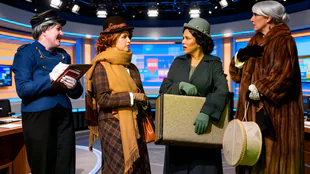
Anton Corbijn’s new film A Talent for Murder, adapted from Joanna Murray-Smith’s 2014 play, depicts a dying Highsmith played by Mirren. The film is set in Switzerland in 1995, when Highsmith had lived alone for years after ending her last relationship with translator Monique Buffet at age 66. Tortured by her sexuality, unrequited love, and a poisonous mother, happiness eluded her. The film’s premise—that a young American editor must persuade Highsmith to write one last Ripley novel—is fiction, though it is built on real details such as her water glasses filled with cigarettes, her pet snails, and the Bond villain bunker she designed.
The image of the misanthrope has helped keep Highsmith’s legacy alive, with recent Netflix remakes of the Ripley stories. However, some wonder if the knife-collecting sadist has become a caricature. She hated publicity, which made life difficult for her champions. Penzler recalled taking her to an Italian restaurant where a publicist brought roses. Highsmith threw hers on the floor without making eye contact.
After that incident, Penzler took on chaperoning duties. Interviews were brief and sometimes never published. The only positive comment she made was when Penzler asked if she would like a drink. She replied, "I would have a beer. I like beer." Her Swiss editor, Anna von Planta, recalled a similar first encounter in 1984. Highsmith greeted her coolly, disregarding an extended hand, ordered a beer, and fell silent.
By 1967, Highsmith had begun a lifelong relationship with the Swiss publisher Diogenes, which took control of her literary estate upon her death. It also acquired 56 volumes of unpublished diaries, letters, and stories filed at the back of her linen cupboard. These diaries revealed Highsmith’s antisemitism and racism. In a 2021 introduction to a published edition, Von Planta wrote that Highsmith’s views were represented faithfully, even where offensive, but that editors denied her a stage for the most extreme instances.
Penzler was asked if he ever felt she crossed a line. He replied that she hated so much, including women, and that any antisemitism in her stories was mild compared to other things. Even those repelled by her prejudices appreciated her work’s strangeness, precision, and unfashionable darkness. The horror of the Tom Ripley novels lies not just in violence but in his increasing enjoyment of it. That bleakness sold better in Europe; a weak late novel, Found in the Street, sold 40,000 copies in Germany compared with 4,000 in America.
Gary Fisketjon was Highsmith’s next and final American editor at Atlantic and then Knopf. He died suddenly of a stroke on November 7 at age 72, but when spoken to a week earlier, he had good memories of her. She was no pussycat, but neither were his other authors, including Jay McInerney, Donna Tartt, and Cormac McCarthy. He regretted a lunch that never came together with Highsmith, Bret Easton Ellis, and Michel Houellebecq.
Fisketjon said they never had a cross word. He took her to dinner at the Odeon, where she was captivated by studying everyone in the room. In an 1984 diary entry, Highsmith wrote that it would be interesting to see what good writers came from cocaine takers. At the Frankfurt book fair, she and Fisketjon talked about their cats. She was a superstar in Germany and instructed him on the best way to drink beer with foam on top.
Fisketjon published Found in the Street (1987) and Ripley Under Water (1991), giving notes as he would for any author. Highsmith would often say, "I see what you’re getting at, but here’s a better way of improving it." When Hollywood scouts took him for lunch, he told them to look at her backlist. He had passed on her final novel, Small g: A Summer Idyll, feeling he couldn’t publish it as fervently as she deserved.
They stayed friends, trading letters and cat news. Fisketjon saw A Talent for Murder a couple of days before his death and liked it, though he found the plot implausible. He noted that Mirren’s expressions reminded him vividly of Pat, even if her personality was darker than he ever saw.
Liz Calder looked after Highsmith at Bloomsbury in the late 1980s until the author’s death. She is mentioned in Highsmith’s diaries as having a parrot called Jon-Jon, though Calder corrects this to Juju. Calder remembers Highsmith as very unusual, commenting on things around her or what she was wearing. She was almost unsocialized but had close friends in London, France, and Switzerland.
Highsmith died of lung cancer and anemia on February 4, 1995, at age 74. American papers ran obituaries, but there was no bump in sales. In 1998, editor Robert Weil approached Diogenes about publishing her books at WW Norton. They insisted he acquire all 14 then out of print in America, including Strangers on a Train. Weil agreed to the terms, eventually taking on her last unpublished novel, Small g, as well as the Ripleys and Carol.
Weil, now an executive editor at Liveright, speaks from a New York office lined with Highsmith box sets. Actor Alden Ehrenreich spent time there researching A Talent for Murder. Weil thinks there is still more to be done with Highsmith. He reckons there are at least five potential screenplays in a 2002 collection, Nothing That Meets the Eye.
Weil says Highsmith could do amazing things in 12 pages. She knew how to finish something so that you feel stabbed at the end. There are a few happy stories, including an evocation of New York in the late 1940s. But she had a gimlet eye for hypocrisy. Exile gave her clarity; she learned to skin and savage America but never left it psychologically.
In her understanding of greed, she is like Edith Wharton. But in terms of psychological manipulation, there are very few like Highsmith. She was so far from the mainstream that she should have been a debutante from Dallas. Highsmith was rude and sometimes bigoted. She also had a capacity for friendship and work that would have been impossible without empathy. Both things can be true.
In March 1995, Liz Calder caught a train to Highsmith’s memorial service at the Chiesa di Tegna in Switzerland, accompanied by her UK agent Tanja Howarth. They had both found Highsmith difficult but wanted to go. It was well attended but not by many publishing people. The Highsmith they knew was not the one her friends mourned. She was a mystery to the last.
H.Wagner--LiLuX