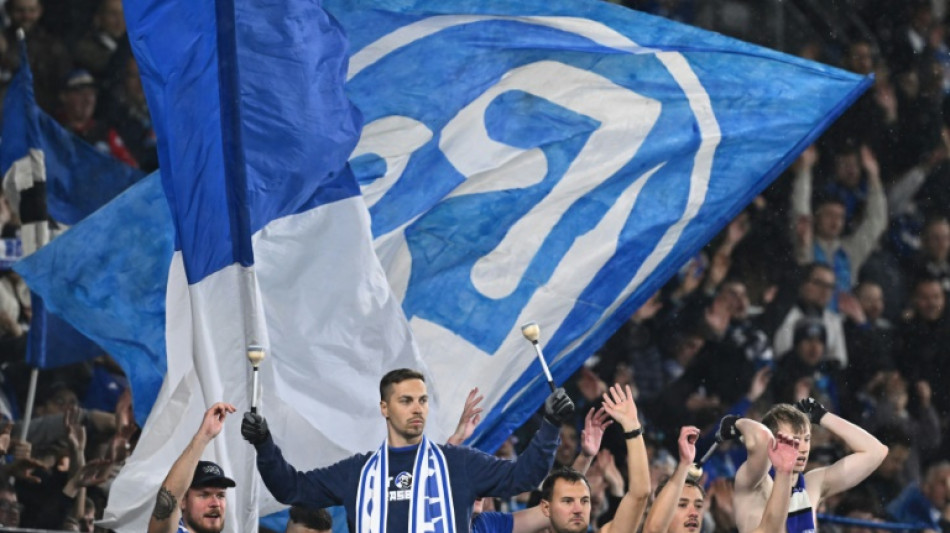
Strasbourg face pitfalls of multi-club system as Chelsea take Rosenior / Photo: SEBASTIEN BOZON - AFP/File
The departure of Strasbourg coach Liam Rosenior to take over as Chelsea manager has exposed the harsh realities of multi-club ownership, which is gaining ground across the world but causing discord between supporters and teams.
The relatively inexperienced Rosenior, 41, has achieved a remarkable elevation from the modest French Ligue 1 side to the World Club Cup champions, who are both owned by American Todd Boehly's BlueCo consortium.
Worldwide, between 200 and 300 clubs are part of a multi-ownership group. Manchester City, who sit at the top of City Football Group, and Manchester United (Ineos) are some of the other big names.
A clear hierarchy exists within such a structure and not being at the top of an ownership group can mean being reduced to the role of feeder club.
The consequences of being in such a position are hitting home for Strasbourg supporters, who have been left enraged after their promising young coach moved to Chelsea on Tuesday following the Premier League giants' decision to part ways with their previous boss, Enzo Maresca.
"When you're not at the top, you're also there to serve the interests of the multi-owner and the consortium," Christophe Lepetit, director of studies at the Centre for the Law and Economics of Sport at the University of Limoges in France, told AFP.
For Strasbourg fans it was a case of more salt being rubbed into the wound as they were already upset by the announcement last year that the club's captain and star striker Emmanuel Emegha is to join Chelsea next season.
But Lepetit argues that multi-ownership does have other benefits for smaller clubs.
"Strasbourg would never have had access to the players who are in the squad today, would not have been able to retain Emmanuel Emegha last summer, and might not have been able to retain Joaquin Panichelli during the winter transfer window given his start to the season," he said of the Argentine forward who has scored 10 league goals so far this campaign.
Strasbourg's ties with Chelsea have also enabled them to enjoy the services of players of the quality of England defender Ben Chilwell this season and prior to that Brazilian midfield dynamo Andrey Santos, who spent a season and a half on loan from the Premier League giants.
- 'Only ones loyal' -
Other clubs, such as City Group members Troyes who lost rising talent Savinho first to Girona on loan and then to Manchester City, have had key players sign for the flagship club of their multi-ownership group.
But until now none had lost two such key figures in such a short space of time to the same entity as Strasbourg have.
This feeling that their club has lost independence in managing their own affairs has fuelled frustrations in fans around the world.
Luc Arrondel, a sports economics researcher at the French National Centre for Scientific Research, highlighted the importance of the "notion of identity" for fans.
"Supporters consider themselves to be the only ones loyal to their club, and that's not necessarily wrong," he said. "Today, players change clubs a lot, as do coaches, and now there are more and more changes in ownership."
The profile of investors is also changing with the massive influx of private equity funds into football.
"Investing in a single club can be risky with promotions and relegations, so it's in their interest to diversify their assets" by betting on several clubs at once, reselling players or even clubs, Arrondel added.
Multi-club ownership has also started to affect club competitions.
UEFA rules on multiple ownership forced Crystal Palace, who had qualified for the Europa League, to be relegated to the UEFA Conference League this season to avoid them playing in the same competition as Lyon -- a fellow member of the Eagle Group multi-club structure.
As the model continues to grow across the game globally, it remains to be seen just how consortiums will adapt to manage all of their assets, and whether fans will continue to accept it.
V.Bertemes--LiLuX