Wildlife face 'catastrophic' losses as France's forests burn / Photo: ALAIN JOCARD - AFP
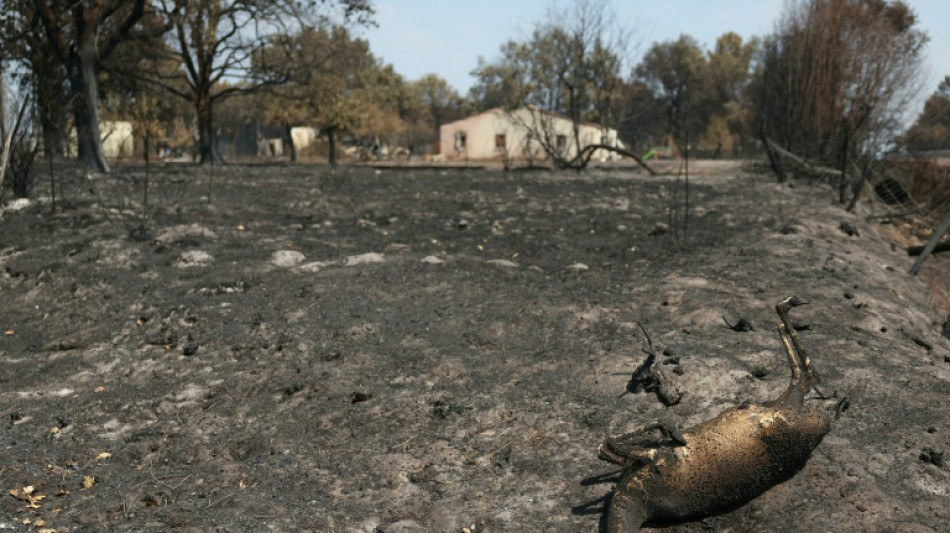
Deer trapped by walls of flame, lizards unable to escape the heat, habitats reduced to charred wood and ash: wildlife are paying a steep price as France's forests burn.
Some 42,000 hectares (103,000 acres) of forest west of Bordeaux has burned since Wednesday and authorities fear a heatwave forecast this week could breath fresh fury into the blaze.
Homes, farmland and vehicles have been incinerated in Gironde but wildlife has suffered "extremely significant losses" too, said France's ecology minister Monique Barbut on Monday.
It is too early to determine a precise toll "but it is clear that the figures will be catastrophic", Barbut warned.
In hard-hit communes like Le Porge on the Atlantic coastline almost "nothing could have survived" the intensity of the fires, Laurent Tillon from the state-run forestry department told AFP.
"The power and energy released were far too great," said the engineer from the National Forestry Office.
- Nature rendered uninhabitable -
Threatened species like the Western spadefoot burrowing toad would have been among the local animals unable to withstand the extreme heat, smoke and flames, ecology experts told AFP.
Creatures big and small would not have been spared -- from the large and striking ocellated lizard to the tiny Etruscan shrew, one of the the smallest mammals on Earth.
Insects would have perished en masse with lasting knock-on effects for the animals that feed on them, said Gregoire Lois, an ornithologist at the National Museum of Natural History in Paris.
Birds that frequent the forested region -- particularly passerines which feast mainly on insects -- would suffer long after the flames have subsided.
"That area will be completely inhospitable next year," Lois told AFP.
Enormous volumes of ash pollute rivers and streams and harm marine life, Celine Sissler-Bienvenu, an animal protection and crisis management expert, told AFP.
She singled out the European pond turtle, a long-living species which was greatly impacted by major fires in the same region in 2022.
- No safe haven -
Faster-moving wildlife like deer can flee the immediate threat of flames but face secondary danger when driven into unfamiliar terrain, experts said.
Some get disoriented and trapped by shifting fire fronts while others run onto roads and train lines, risking deadly collisions.
Inhalation of smoke and toxic fumes also poses immediate and long-term health problems especially for smaller creatures like birds, said Sissler-Bienvenu.
The loss of habitat and feeding grounds poses its own challenges for survivors.
"They have to find a place for themselves among territories already occupied by others, with limited resources," said Lois.
The impact on wildlife by the fires -- and the question of what to do next -- will be discussed by the prime minister's office on Tuesday.
Barbut said reintroducing species driven out by fire was tricky "when there are no longer any forests".
"Wildlife needs a habitat," she said.
V.Bertemes--LiLuX