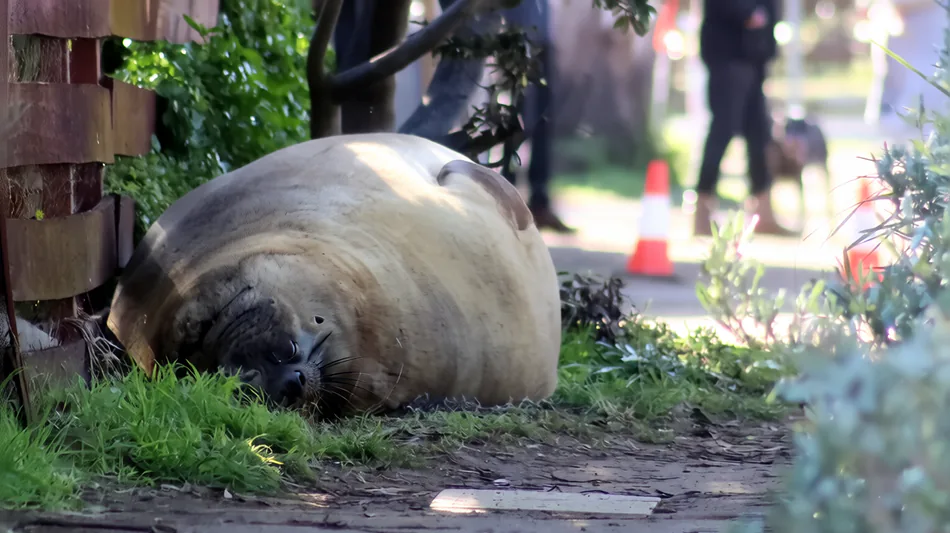
Tasmania Unveils Management Plan for Viral Elephant Seal Neil
Tasmanian authorities have published a comprehensive 27-page management plan to address the challenges posed by Neil, a six-year-old elephant seal who has become a viral sensation and a source of infrastructure damage. The new framework outlines protocols for monitoring the animal and deploying non-violent deterrents when he hauls out in populated areas.
The Tasmanian government has released a detailed 27-page document outlining how officials will manage Neil, a six-year-old elephant seal who has become both a local mascot and a logistical headache. The plan addresses the recurring challenges posed by the marine mammal’s annual haul-out period, during which he frequently causes damage to public infrastructure and requires significant resources to keep the public at a safe distance.
Neil, who weighs more than 2,000 pounds, has gained widespread attention on social media for his antics in southeastern Tasmania. However, his presence has also resulted in tangible costs and disruptions. Officials report that the seal has destroyed walkways, flattened bollards, knocked through fences, and rammed vehicles. The Department of Natural Resources and Environment stated that maintaining a safe distance between Neil and the public has cost tens of thousands of Australian dollars.
The newly published dossier, titled "Neil the Seal Management Plan," establishes a framework for handling the animal’s recurring appearances. It acknowledges the complex challenges associated with his presence while aiming to balance public interest with safety and property protection.
Under the plan, a dedicated task force will monitor Neil’s location. If he hauls out in a secluded area, officials will adopt a non-intervention approach. In these scenarios, the team will erect signs to alert the public of his presence and advise them to maintain distance. Security personnel may be deployed if members of the public attempt to approach the seal.
If Neil comes ashore in a more public location with access to roads or critical infrastructure, the plan activates an "on-site seal management" protocol. One proposed tactic involves "hazing," described in the document as a non-violent method using deterrents and negative associations to compel the animal to move. This can include controlled visual, tactile, and vocal stimuli.
The report notes that Neil appears to be adapting to standard management practices, necessitating that officials remain nimble in developing new methods to curb his behavior. To redirect his natural exploratory instincts away from infrastructure, officials propose "seal enrichment." This involves providing decoy items designed to withstand repeated interaction, allowing the seal to engage with objects without damaging public property.
Despite these measures, the government acknowledges that significant events may still occur, including road closures, public safety incidents, or wildlife-borne disease outbreaks. The public is advised to contact the Marine Mammal Hotline, known as "0427 WHALES," if they encounter Neil or observe any concerning behavior.
G.Muller--LiLuX